-
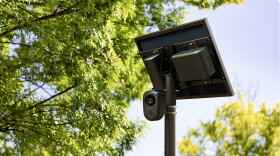 New Hampshire has a decade-old law strictly curtailing the use of license plate scanners. The company declined to say if it has cameras in the state collecting data.
-
 The McKee administration's proposal to adopt new statewide standards for automated license plate readers is voluntary for now. Critics say it leaves the biggest questions open
-
 Popular chatbots like Claude and ChatGPT are powered by models trained on enormous amounts of information, which means spending billions on vast data centers that take more power and water than entire cities. Instead, roboticists like Matthias Scheutz are thinking small. They’re designing AI systems compact enough to fit on a single computer chip.
-
 Real-time crime-center software is a sometimes overlooked but powerful tool allowing police to aggregate immense amounts of data, significantly expanding their surveillance reach.
-
 Regent's prototype combines Cold War aerodynamics with America's Cup hydrofoils at a new North Kingstown factory expected to create nearly 400 new jobs
-
 Connecticut’s police standards advisory council approved guidelines to help cities and towns implement new state restrictions on Flock cameras.
-
 Earlier this month an organized criminal group managed to hack into the school district computer system in Springfield, Massachusetts. The incident is still under investigation. But the school district is not alone in its vulnerability. Cyber attacks are an increasingly widespread problem for public schools.
-
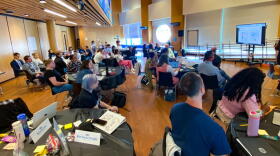 A district by district approach reflects the patchwork nature of AI guidance in Massachusetts as the technology rapidly evolves and affects learning, putting K-12 leaders on alert.
-
 Lawmakers are expressing broader willingness to regulate AI development, but the path forward may not be a quick one.
-
 The executive order comes two years after Healey said she plans to make Massachusetts into a hub for development of AI technology, but one expert says it's too early to say whether the two efforts will conflict with each other.

© 2026 Powered by New England News Collaborative
New England stories from the region's top public media newsrooms & NPR
Play Live Radio
Next Up:
0:00
0:00
Available On Air Stations


